When There Is No Manual
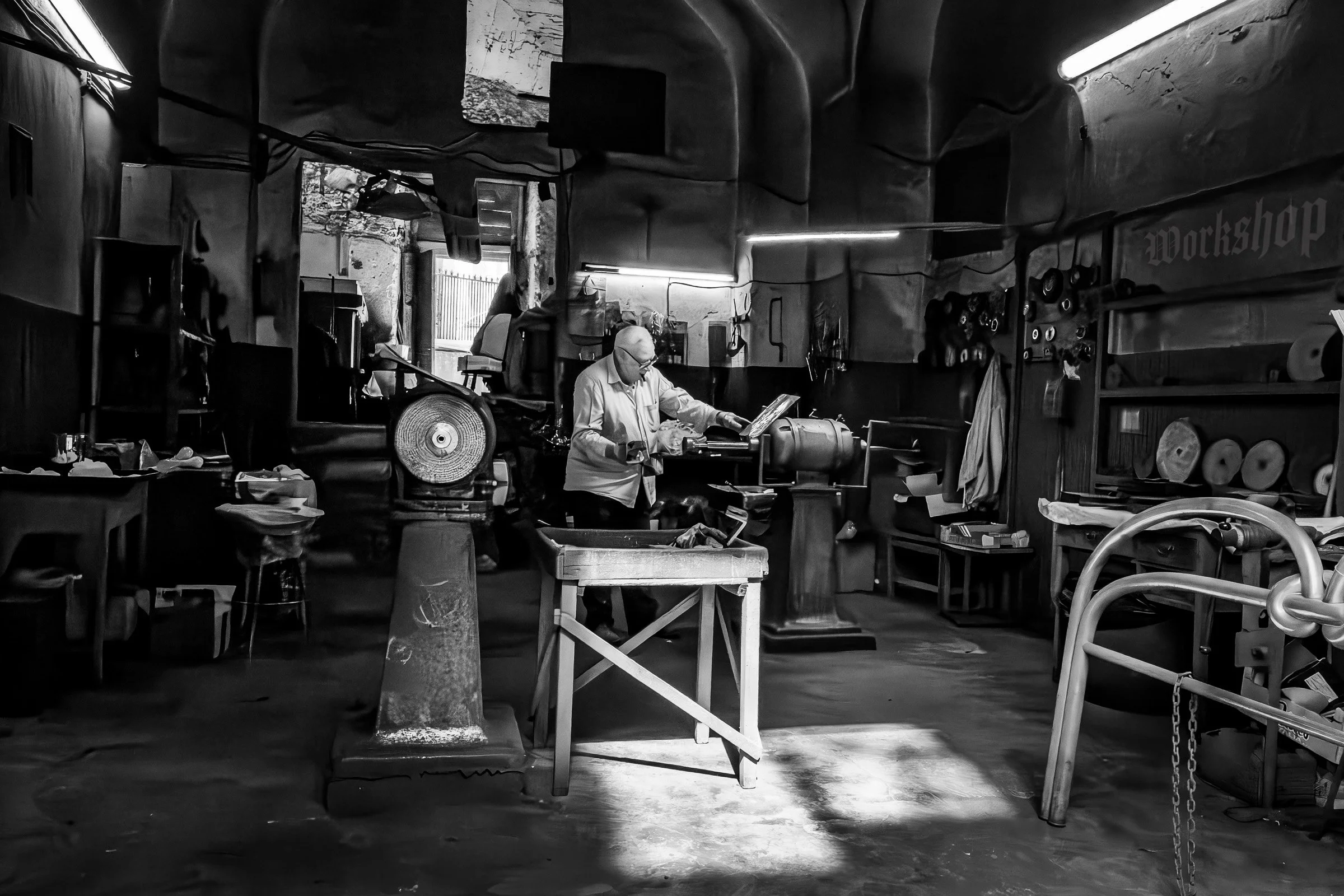
Workshop
Walk into a workshop like this and the first thing you notice is how little you understand. Half the tools on the walls have no obvious purpose. What looks like clutter is clearly an ordered system, every object within reach because someone has spent decades learning exactly where it belongs and what it does.
Which raises an uncomfortable question: if he stopped tomorrow, what would be lost? Not the tools, which could be catalogued, or the space, which could be repurposed. What would disappear is the knowledge: which tool for which problem, which adjustment for which fault, the thousand small decisions that never made it into a manual because they never needed to. They lived in his hands.
Most organisations have a version of this workshop. The person who has been doing something so long that their knowledge has become invisible, even to them, because it no longer feels like knowledge. It feels like instinct. Nobody asks them to write it down because nobody quite realises there is anything to write down. It only becomes visible the day they leave and the room goes quiet.
Expertise that exists in only one set of hands is fragile, however valuable it might be.
Is there someone near you whose knowledge you have never properly asked about?
David R. Smith