Effort Is the Message
Paris
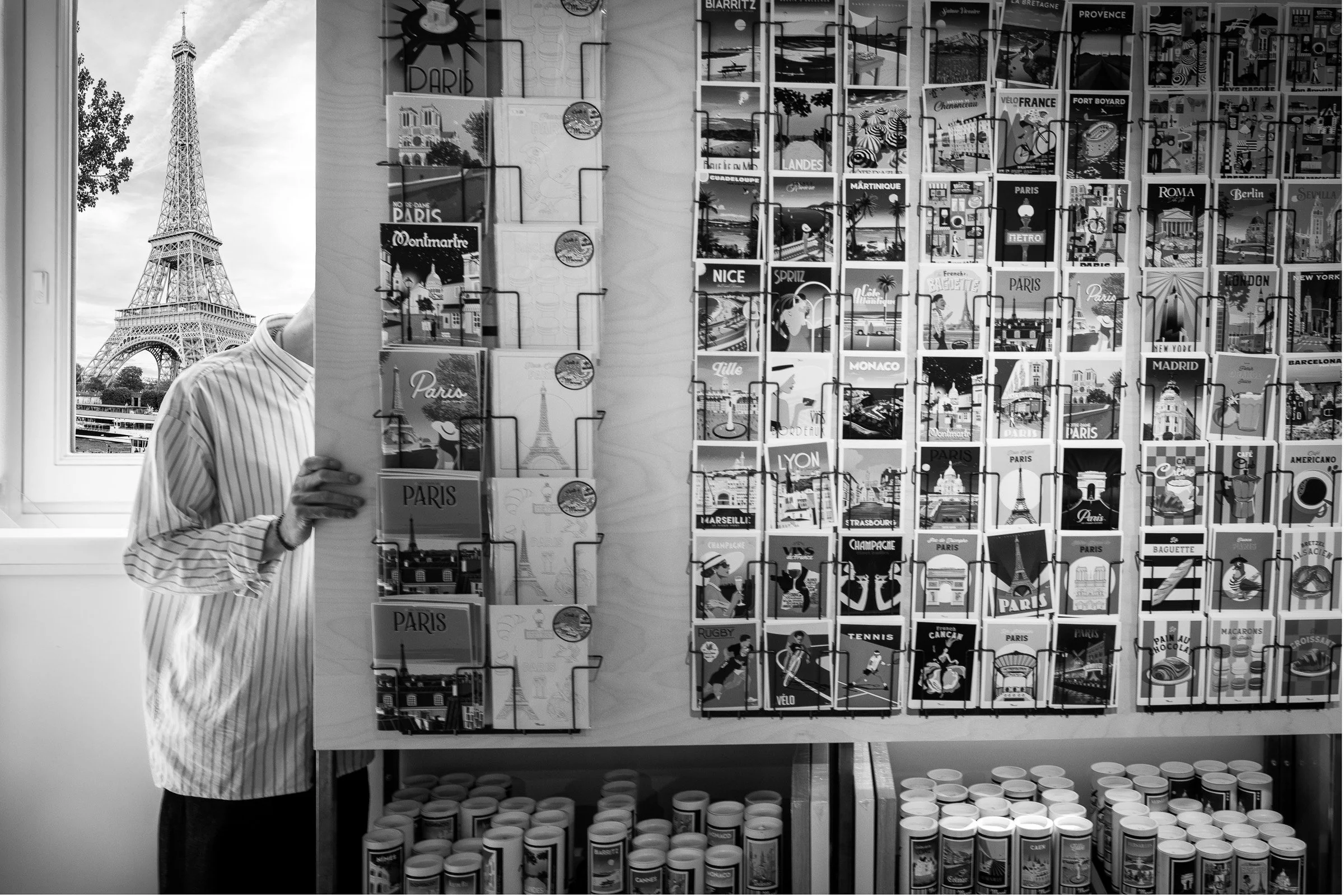
He is standing at a rack of postcards with the Eiffel Tower visible through the glass. He could simply take a photograph in less time than it takes to choose a card. Instead, he is considering something slower: a printed version of the very thing standing right behind him.
At first glance that choice makes no sense. A photo sent instantly does the same job faster and for free.
The postcard is the harder option, and that is precisely why it conveys more. A handwritten note signals that the person receiving it was worth more than the easier gesture. The slowness is not an inconvenience to be tolerated. It is the message.
Almost nothing requires that kind of effort any more. Most communication has become instant, frictionless, and nearly free, which means the rare moments people still choose the slower path stand out precisely because they no longer have to.
The real issue is when speed has nothing to do with efficiency at all. Some leaders deliver redundancy by email rather than in person, not because email is faster in any way that matters, but because it avoids having to sit with someone's reaction. Some employees accept a job and simply never turn up, rather than making the harder call to explain they have changed their mind. In both cases, the fast option is not really saving time. It is avoiding discomfort, and offloading that discomfort onto whoever is on the receiving end.
The postcard buyer has it the other way round. He is taking on the harder, slower path so that someone else feels the benefit of it.
Where in your own work do you default to fast, not because it serves the other person, but because it spares you something?