The Desire to Be Loved, and to Be Lovely
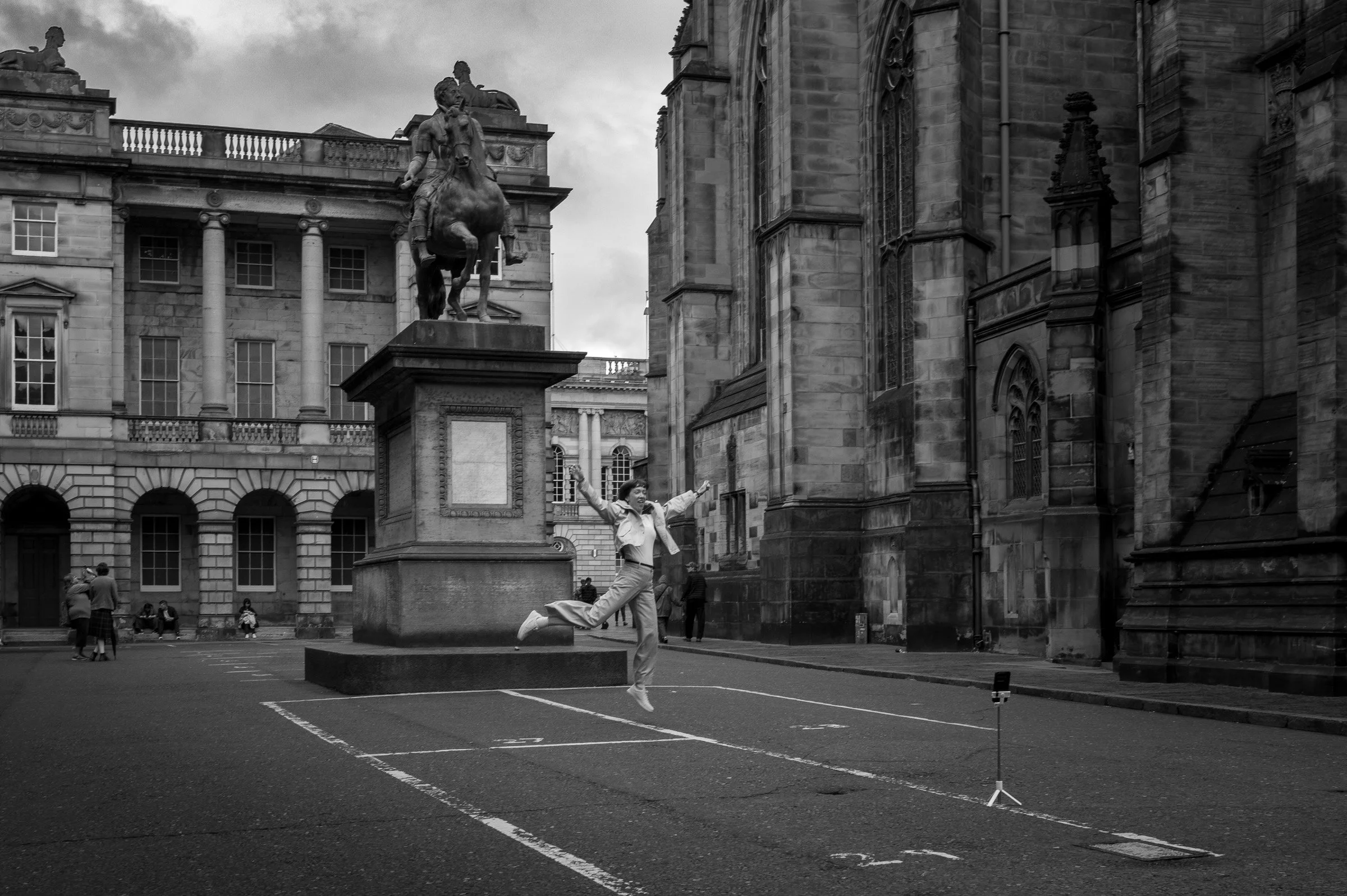
Edinburgh, Parliament Square 2026
We have all taken a selfie from time to time. Many will have uploaded an image to social media, and then await the hearts, the thumbs up and comments; a recognition of what we did was worthy.
This image was taken a few yards from the statue of Adam Smith. He is facing the other way but if he could turn and see what was going on in Parliament Square, with the Court of Session behind the person, and St Giles to the right, he'd have no doubt smiled and recalled what he had written in his Theory of Moral Sentiments.
“Man naturally desires, not only to be loved, but to be lovely; or to be that thing which is the natural and proper object of love. He naturally dreads, not only to be hated, but to be hateful; or to be that thing which is the natural and proper object of hatred. He desires, not only praise, but praise-worthiness; or to be that thing which, though it should be praised by nobody, is, however, the natural and proper object of praise.”
We want approval from others, but also want to deserve it.
Or put another way, "When a man has bribed all the judges, the most unanimous decision of the court, though it may gain him his law-suit, cannot give him any assurance that he was in the right.”
The phone, despite any messages, cannot give the individual an answer as to whether what they did deserved it. Despite the nearby advocates and ministers, the only person whose judgement matters is the one in the image.
Smith takes moral sentiment a step deeper.
“We endeavour to examine our own conduct as we imagine any other fair and impartial spectator would examine it." Later he writes, "…the man within the breast, the supposed impartial spectator, the great judge and arbiter of our conduct. If we place ourselves completely in his situation, if we really view ourselves with his eyes, and as he views us, and listen with diligent and reverential attention to what he suggests to us, his voice will never deceive us.”
Smith is not saying the judge depends on our audience. While that has a part to play, the real impartial spectator is one that lives inside us.
The statue would have observed that no one in the square was watching the person, but thousands across the globe might get access to the image. Nevertheless, only the person in the square was the real judge. Whether they chose to post the image or not did not matter if their impartial spectator felt it worthy.
“The applause of the whole world will avail but little, if our own conscience condemn us; and the disapprobation of all mankind is not capable of oppressing us, when we are absolved by the tribunal within our own breast, and when our own mind tells us that mankind are in the wrong.”
Whatever the messages say, whether they be complimentary or derogatory, the inner judge has the right to overturn them all. When we know what is right, we will be content to stand our ground.